Key Insights
- 47 per cent of businesses experienced revenue downturn, most notable in small and micro businesses.
- 75 per cent of small businesses only had ‘ad hoc’ approach to risk management.
- Majority concerned with financial and operational pressures, along with human and reputational risks.
- Broker satisfaction stabilised at 69 per cent.
- Majority comfortable with AI usage in insurance processes.
Insurer Vero has released its 2026 SME Insurance Index, with results showing a growing recognition of risk management as a strategic priority, alongside persistent gaps in areas such as business continuity planning and a cautious approach to emerging technologies like artificial intelligence.
Now in its 15th year, the 2026 SME Index surveyed over 1,500 Australian businesses, including a mix of micro, small, medium, large and very large businesses.
The results revealed that three quarters of small businesses have never completed a risk analysis (74 per cent), at a time when almost half reported a decline in revenue over the past 12 months (43 per cent), according to the 2026 Vero SME Index.
The Index highlights a ‘two speed economy’, where almost half of small businesses experienced a revenue downturn, compared to more than a third (39 per cent) of large businesses that saw growth.
This divergence is driving starkly different approaches to risk management and business continuity planning.
Economic pressure remains most acute for small and micro businesses, with almost two- thirds (61 per cent) of micro businesses reporting lower revenue in the past 12 months.
Where the majority of large businesses (64 per cent) have adopted mature risk management processes, 75 per cent of small businesses said they take an ‘ad hoc’ approach to risk management.
The report found a similar trend for Business Continuity Planning (BCP), where a third of small business owners and decision makers (33 per cent) were unfamiliar with the term, and a further quarter (25 per cent) were familiar but were unsure what BCP entailed.
Vero’s Head of Distribution, Anthony Pagano, said businesses need stronger risk management frameworks and clear operating plans to navigate disruptions and critical events such as cyber incidents, natural disasters and supply chain disruptions.
“SMEs are navigating a landscape shaped not only by economic uncertainty, but an expanding range of risks, with over half of our survey respondents concerned with human factors like mental health and staff retention,” Mr Pagano said.
“To guide them through uncertain times, we found over half of businesses received risk advice from their insurance broker, with the majority of businesses actioning this advice."

Broker use and satisfaction
The report indicates that broker satisfaction has stabilised across both SMEs and large businesses, with 69 per cent of clients saying they were satisfied in the past year.
The Index also suggests insurance claim satisfaction is higher among broker users, where 95 per cent of heavy users stated they were satisfied with their claim experience.
The large majority of businesses (80 per cent) have been using a broker in the past year, with almost half (42 per cent) having used the same broker for over three years.
“This year’s findings highlight not only the stability of broker relationships, but also the deepening reliance and satisfaction among businesses that choose to collaborate with brokers,” Mr Pagano said.
“We’re also seeing strong numbers of businesses continuing to use the same broker over a long period, underscoring the importance of fostering deep relationships and working closely with clients as their challenges and needs evolve.
“Against a backdrop of heightened broker consolidation, intense competition and prevailing market pressures, it is encouraging to see businesses maintain these connections.”
Growing AI trust
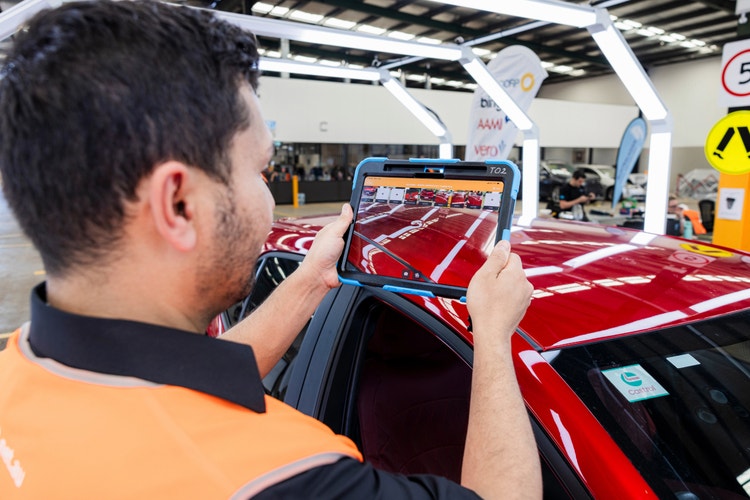
The SME Index suggests over half of businesses (55 per cent) are comfortable with their broker using AI to support insurance-related processes, including using chatbots (64 per cent), comparing insurance products (72 per cent) and faster quoting through pre-filled forms (74 per cent).
At claim time, most businesses indicate they were comfortable with brokers using AI to assist with administrative tasks, such as providing claim evidence (67 per cent) and reporting the incident through AI (64 per cent).
However, comfort drops significantly when it comes to decision-making with only 40 per cent comfortable with AI being used to support a claim outcome decision.
“We have seen clearly that businesses are beginning to embrace the adoption of AI in the insurance process, as a useful tool to support efficiency, but our report has highlighted the importance of human judgement at the crunch time of a claim,” Mr Pagano said.
“It is critical that brokers highlight their expertise even as they quickly adopt AI in their workflow, and keep trusted relationships at the forefront especially during the course of a claim.”