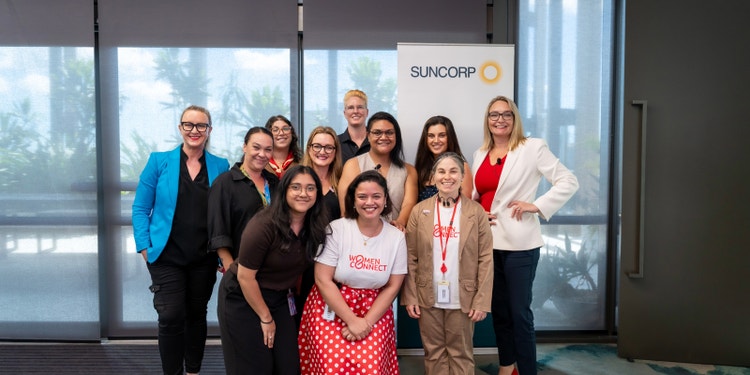
Gender does not exist in isolation when it comes to a person’s identity, so recognising intersectional experiences and how they influence the barriers and opportunities people face is a key part of moving towards gender equity.
Suncorp team members came together to reflect on this message during the panel discussion hosted by EM Sponsorships & Community, Jenny Hutchison.
The panel also included EGM Digital Insurer and First Nations Employee Resource Group One Mob Executive Sponsor, Katherine Carmody.
Through this year’s theme ‘Balancing the Scales’ the event highlighted the importance of celebrating intersectional identities and advocating for women who may be part of marginalised communities or experiencing vulnerability in their lives, such as domestic violence or financial hardship.
Katherine and Jenny were joined on stage by two guest speakers: Refiti Tovi – a proud First Nations Pasifika queer woman who brings a unique perspective on issues around culture and gender – and Jamila Rizvi – a workplace equity advocate known for her efforts in promoting fair and inclusive work environments.
Katherine reflected on some of the meaningful actions Suncorp has continued to take towards gender equity, including year on year improvements in reducing the organisation's gender pay gap and increasing the number of women in senior leadership roles to almost 50 per cent by the end of FY25.
“This year’s theme ‘Balancing the Scales’ is something I’m really passionate about, because I know achieving fairness is not necessarily about treating everyone exactly the same,” Katherine said.

Recognising intersectionality
Refiti was raised between Aboriginal and Samoan cultures, allowing her to bridge diverse worlds and champion inter-generational change through social transformation and advocacy.
Her career also covers over ten years of expertise in early childhood education, spanning teaching, management, curriculum research and cultural advisory.
She shared some of the challenges she faced as a person of colour and a member of the LGBTQ+ community.
“People will notice what’s more familiar to them – for me that took years to unpack and to understand what real allyship looks like.
Jamila is the Deputy Managing Director of Future Women – an organisation that supports women who work and want to work.
In her career she has found that balancing the scales starts with recognising that the experiences of women moving in and out of the workforce is not the same as for men.
She explained that women who experience career interruptions – usually to take time off to care for children or ill loved ones – often face disadvantages at retirement because these disruptions create a pay imbalance.
“And it’s not because those women are not working – they're just doing work that we as a society have decided not to pay,” Jamila said.
“This is especially the case for women who face additional intersectional barriers, such as First Nations women, those with a disability or women experiencing vulnerability.”


Commitment to collective responsibility
A key topic of the panel discussion was around the collective responsibility we all share in moving towards gender equity and how this can be achieved through allyship.
Refiti shared her experience of working in the early childhood sector for over 10 years before she received the support of an ally who helped her move into a manager position.
“She was beautiful and helped me become the director of a service,” Refiti said.
“And it took so long for that one person to help me become part of management in a nationwide team of curriculum researchers and advisors.
“But imagine what would happen if there were more allies?”
Refiti shared her key attributes to being a genuine ally:
- Listen actively to others.
- Avoid unconscious biases and keep an open mind.
- Speak up about hard truths and use your voice.


Jamilla added that the results of this collective advocacy and inclusion of all voices at the table will have tangible benefits to organisations.
And this comes from the diversity of views and experiences contributing to business decision making.
Katherine said she hoped that the one message everyone can take away from the session is the impact the one person can have on another’s life by simply being an ally.
“The one thing I hope everyone can take away from this session is to take opportunities to open doors, raise other’s voices, and give some space to someone else's perspectives – everyone can do that and has that opportunity to advocate.”