
Steve Johnston
Suncorp CEO
One of the greatest privileges of my job is stepping out from behind the desk to meet the people we help, shaking hands, listening to their stories.
Often, they are experiencing their darkest days. In my 20 years at Suncorp, the look on the faces in those first few days following a major weather event never leaves you.
It’s these human faces that sit behind our billions of dollars of insurance claims, and every single one matters.
A year on from Cyclone Alfred making landfall we’ve made good progress on repairing homes, cars, businesses, but the rebuilding work continues.
Recoveries of this scale take time. That’s the reality.
And it places enormous financial and emotional pressure on individuals, families and communities.
While Alfred caused serious damage, in many ways we were lucky. I distinctly remember the days leading up to landfall, thinking: this could be the big one.
For years, scientific modelling has been telling us to expect cyclones to shift further south, meaning they would impact higher density communities, whose building codes and infrastructure have not been designed to withstand the impacts.
Had Alfred remained a Category 2 cyclone, we could have been dealing with far more significant physical and economic impacts.
While that didn’t eventuate, it did provide a stark warning. Twelve months on, what’s changed?
Anniversaries like this are often marked as momentum slows, public interest fades and the news cycle moves on.
For some the recovery continues, and too many others remain in harm’s way.
Let’s not let this be another anniversary in which we simply reflect. We need to act.
The truth is, we cannot afford to keep rebuilding the same homes, in the same ways, after the same damage - again and again.
Building resilience is not the job of insurers alone. It must be shared by homeowners, communities and governments.
That means investing upfront in stronger homes, smarter planning and more resilient infrastructure.
Striking the right balance between boosting housing supply and ensuring we build homes suitable for the increasing risks associated with extreme weather is no easy task.
Pausing reforms to the National Construction Code that push for stronger and more resilient homes will simply transfer the cost into the future, leaving many Queenslanders exposed to greater risks and deepening the insurance affordability challenge.
North Queenslanders are no strangers to severe weather and again this summer, have faced the threat of cyclones.
Yet their ability to withstand and recover from comparable events, is far greater thanks to efforts that have been made to make their communities stronger and safer.
We can’t underplay the critical role of maintenance, both at a community and household level.
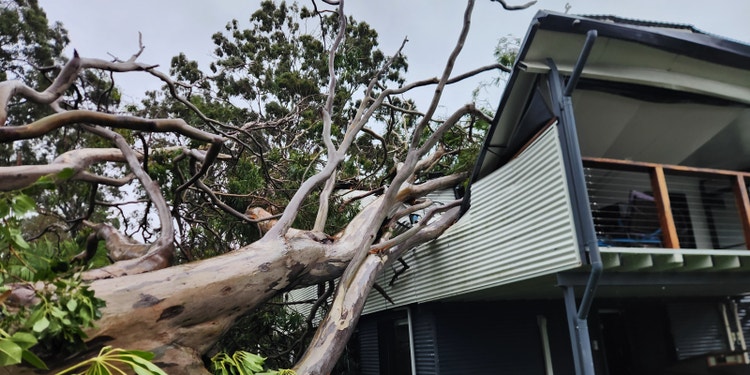
Some of the greatest devastation caused through Cyclone Alfred was from giant trees falling onto properties. This underscores the vital roles councils play in vegetation management and maintenance.
And homeowners can also play their part in undertaking simple tasks that help reduce their risk.
For so many Queenslanders, the weather is part of our identity.
That’s why it’s not a question of whether we can afford to, but a matter of whether we can afford not to act before the next major disaster strikes.