Key insights
- Drivers who started with the lowest driving scores improved the most (18.5 points on average).
- One in three participants improved their overall driver score by more than 10 points.
- AAMI Driving Test provides real measurable behavior change at scale.
AAMI's findings show everyday Australians* made significant and rapid improvements behind the wheel, with the biggest gains recorded among drivers who had the most room to improve.
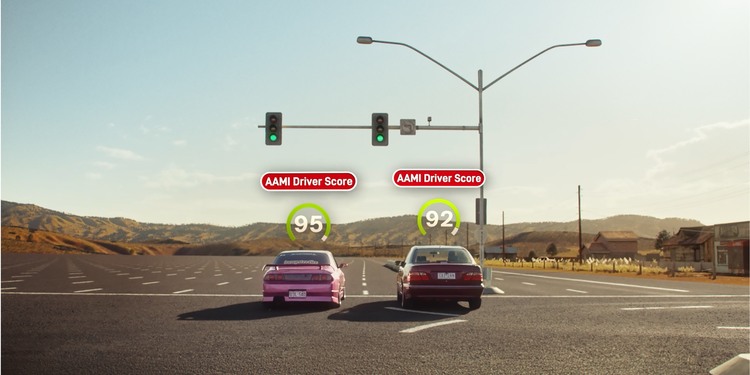
The AAMI Driving Test launched on the AAMI app in September 2025 and was a free national safer driving initiative open to all Aussie drivers.
It used mobile phone telematics data and insights to track real-world driving across almost 100 million kilometres, measuring behaviours including speeding, phone use, acceleration, braking and cornering (on a scale up to 100).
AAMI Motor Prevention Manager Mary Kennedy said the results prove that when drivers are shown clear feedback, many choose to adjust their habits.
“Australians don’t just think they’re good drivers, they want to become better drivers,” Ms Kennedy said.


The improvement story: Drivers responded fast
Across the period AAMI recorded major shifts in core driving behaviours (with scores up to 100):
- Almost one in three increased their average overall driver score by more than 10 points.
- One in eight increased their braking, accelerating and turning scores by more than 20 points.
- For speeding, ADT entrants already had an average score of 97 – just three points away from a perfect 100 – which leaves less room for improvement and shows a great baseline for safe speed behaviour.
- Phone use behaviour started on a high average score of 91 and remained relatively stable during the campaign.
“These are meaningful changes,” Ms Kennedy said.
“Sharper awareness leads to smoother acceleration, safer braking and better control — all things that help avoid crashes in the real world.”

AAMI's most powerful finding
The biggest improvements came from drivers who began with lower starting scores.
Among participants who took part for at least three months:
- Drivers starting under 50 improved by 18.5 points on average.
- Those beginning at 51–60 improved by 13.5 points.
- Drivers starting at 61–70 improved by 10 points.
A separate analysis of low-score drivers (those who began below 70 points) showed:
- One in eight finished with an overall score above 90.
- Nearly one in five moved into the top 90–100 band for braking, cornering and acceleration.
- More than four in 10 achieved a 90+ speeding score.
- One in three reached the top band for phone use.
"What this shows is that awareness leads to action," Ms Kennedy said.
"Giving people insight into their behaviour helps them make safer choices."


Standout state results
- Tasmania recorded the highest overall average driver score (88.5) and topped several behaviour categories.
- The ACT recorded the strongest improvement, lifting scores across braking, cornering and acceleration more than any state.
- NSW delivered broad gains across braking, cornering and acceleration — and was one of only two states not to decline in speeding.
- Queensland saw positive gains in braking and acceleration and held steady in cornering.
- Victorians indicated improved vehicle control with increases in braking, acceleration and cornering scores.
What does it all mean?
Awareness changes behaviour, and the AAMI Driving Test proves it.
Tens of thousands of Australians improved key driving habits, simply by seeing clear, personalised insights into how they drive.
Better data led to better choices - and safer habits behind the wheel followed.
"This is real, measurable behaviour change at scale," said Ms Kennedy.
"When drivers can see their behaviour clearly, they lift their game - and that benefits everyone on the road."
The telematics initiative remains available through the AAMI app, enabling all Australian drivers to track and improve their driving.
AAMI will also continue sharing aggregated insights with governments and road-safety partners to support evidence-based policy and safety initiatives.
Media resources

Radio Grabs