Key takeaways
- The average insurance claim for a burst flexi-hose reached $30,000 in 2025.
- Six per cent of claims for burst flexi-hoses exceeded $100,000 in damages.
- 60 per cent of homeowners report they have never had their connections inspected.
- A Queensland family returned from holiday to find their home destroyed by a burst flexi-hose, with repair costs exceeding $500,000.
A flexi-hose costs less than $20 at any hardware store, is hidden under almost every sink in Australia, and when it fails, it can fill a family home with enough water to fill a small swimming pool in 24 hours.
Despite the rising repair bills, research shows that 60 per cent of homeowners have never had these common plumbing connections inspected.
Suncorp Head of Claims and Assessing Paul Callanan said on average, two flexi-hoses in every household were ready to burst.
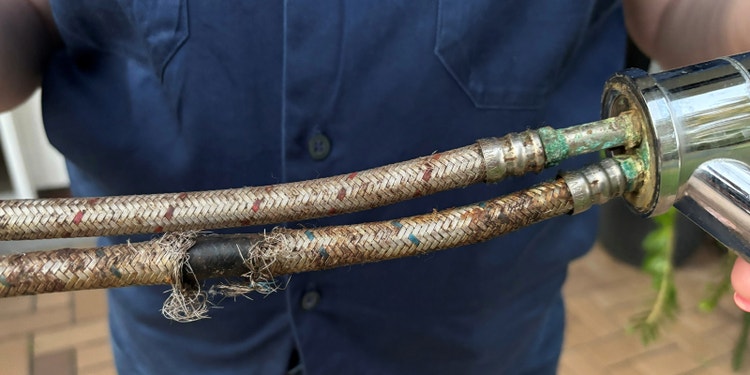
“Flexi-hoses aren’t designed to last forever. They degrade silently, and by the time you notice a problem, it’s often too late,” Mr Callanan said.
“The culprit is almost always the same, either corrosion, rust, or a hose that was twisted or kinked during installation."
Suncorp data shows the average claim cost of a failed flexi-hose has moved from $27,500 in 2025 to $30,000 in 2026, with six per cent of these incidents resulting in claims exceeding $100,000.
One Queensland family felt the full force of a flexi-hose failure when, while on holiday overseas, their bathroom flexi-hose gave way.
The leak ran for just two days, but it was enough to destroy the entire
interior of their home.
“Water tore through the master bedroom, ensuite, four additional bedrooms, the kitchen, lounge, and study,” Mr Callanan said.
“The family was displaced for months while the home was gutted and rebuilt, with the final bill costing more than $500,000.”
A closer look at home insurance claims in 2025 found that one in ten were caused by flexi-hoses.
“This figure has remained stubbornly consistent year after year, but what has changed dramatically is the scale of destruction when they fail,” Mr Callanan said.
“With building and labour costs escalating due to external factors outside our control, and an increasing trend to open-plan home design, we're only going to see the costs of these flexi-hose failures increase.
“If you spot any fraying, rust, or kinking, call a licensed plumber immediately.
"This is especially vital before heading off on holidays, or if you’re leaving the house for an extended period, turn your water off at the mains."
To protect your home Suncorp recommends:
- Checking under every sink for fraying, rust spots, or kinks at least twice a year.
- If leaving the house for more than 24 hours, turn the water off at the mains.
- Don't DIY with the cheapest parts; have a licensed plumber install high-quality hoses.
Flexi-hose facts
What are Flexi-hoses?
Flexi-hoses – also known as flexible braided hoses or flexible plumbing hoses – are a common style of plumbing fitting.
They are a rubber hose reinforced externally with stainless steel webbing, fitted with clamped stainless-steel fittings on either end.
Used to connect water to taps and fixtures, they are especially common in bathrooms and kitchens – where their flexibility, low cost and ease of installation make them a popular choice for plumbers.
If you’ve had some plumbing work done to your home in the past 20 years – it is highly likely you have a flexi-hose under your sink.
How do they burst?
In most cases, a burst flexi-hose is due to the breakdown of the external braiding material due to rust and corrosion or the effects of twisting, kinking or stretching.
Some flexi-hoses can work without an issue for 20 years, while others corrode, rust and fail faster.
