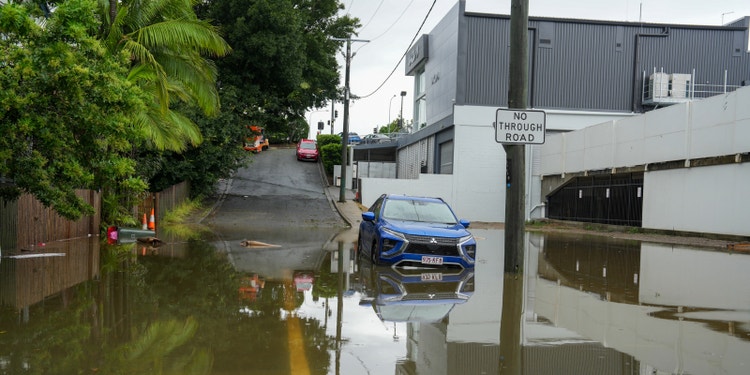
The insurer will deploy its Mobile Disaster Response Hubs across 18 locations to provide additional support for those customers with complex claims, as well as those impacted by the severe storms and hail events in late 2025.
Earlier this week Suncorp also announced $600,000 in funding for grants to support disaster recovery and preparedness projects, in partnership with the Foundation for Rural & Regional Renewal (FRRR).
Cyclone Alfred – twelve months on
The first cyclone to hit Sout East Queensland in around fifty years, ex-TC Alfred made landfall on Moreton Island on Sunday, 8 March 2025 as a Category 1 cyclone, bringing damaging wind gusts, causing widespread power outages.
The hardest hit areas included Runaway Bay, Redland Bay, Nerang, Mudgeeraba and Banora Point.
As at 4 March, Suncorp had finalised more than 93 per cent of its 34,151 claims, including 29,000 claims for home, and around 1,400 for motor and 1,600 commercial claims.
Suncorp’s Chief Executive Consumer Insurance Lisa Harrison said she was proud of the team’s response and continued dedication to supporting customers.

“As highlighted in our Beyond the Event report, we leveraged our investment in the state-of-art Disaster Management Centre to prepare our people, customers and supply chain in advance, as well as expediate our claims process,” she said.
“Now, we are continuing to support those affected with additional face-to-face contact points, particularly for those with complex claims.”
Suncorp Meteorologist Andrew Bufalino said the event provided some important insights.
“While TC Alfred weakened upon landfall around Bribie Island, the event reinforced that cyclone category alone does not reflect overall risk or impact,” Mr Bufalino said.
Mr Bufalino said the event served as a clear reminder tropical cyclones can impact this far south along the eastern seaboard and , in a warming climate, these events will remain a credible and ongoing risk.
“As the climate warms, warmer ocean temperatures and a more moisture-rich atmosphere will increase the likelihood of tropical cyclone impacting regions as far south as South East Queensland and even North East New South Wales.
“While the overall number of cyclones may not increase in a warming climate, the risk of more intense rainfall and higher impact events is expected to rise,” he said.
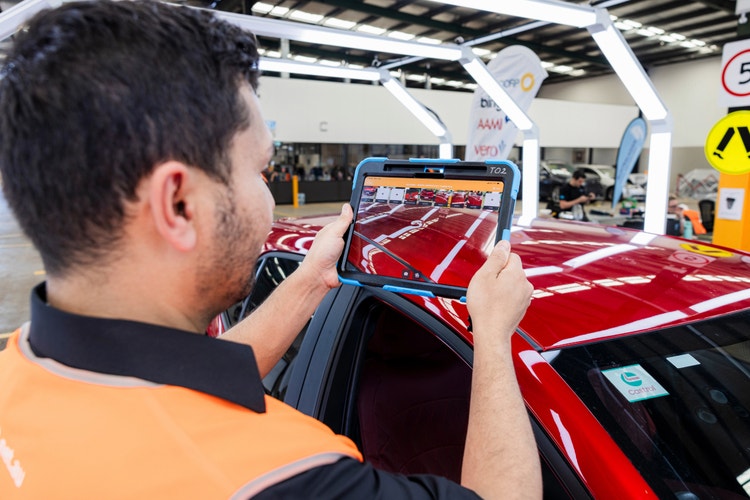

From recovery to resilience
Suncorp’s Ms Harrison said we shouldn’t see this milestone simply as a moment to reflect on what was, but rather look to the future and take action.
‘While the work continues, it’s important that we use this anniversary to highlight the need for us to shift focus from recovery to resilience – working collaboratively with governments, communities and homeowners,” Ms Harrison said.
“It’s why we launched tools like Suncorp Haven to further educate homeowners on the risks their property might be exposed to and how they can help reduce the risk.
“There’s some simple measures we can take to reduce the impact of cyclones, such as adding on shutters and guards, anchoring garden sheds, and installing ridge caps and roof sarking.
"These small improvements could mean the difference between no claim at all or severe damage.”
“We can’t continue to rebuild in the same way in the same places, so it’s vital we work together to invest upfront in stronger homes, smarter planning and more resilient infrastructure,” she said.
Cyclone Alfred – a timeline
- Tropical Cyclone Alfred was officially named on 25 February
- It peaked as a Category 4 system on 27 February
- It continued to move around offshore for several days, changing course and, at times, stalling.
- Cyclone Alfred eventually made landfall as a Category 1 over Moreton Island on 8 March. The system brought destructive wind gusts, causing widespread power outages.
Suncorp’s Tropical Cyclone Alfred response by the numbers
- Scaling up with more than 400 employee volunteers across the business who supported our claims response during peak demand periods, helping ease operational pressure and significantly reduce call wait times for customers compared with previous large-scale events.
- Sending more than 100,000 SMS messages to customers with crucial preparation advice
- Sending more than 523,000 text messages post-impact, guiding customers through the claims process. This is in addition to proactive welfare checks to those we suspected were impacted or vulnerable, offering additional support as needed.
- More than 10,000 food spoilage claims were lodged, and with the assistance of straight-through processing, were paid to customers the same day.
- While more than 64% of claims were lodged digitally as customers increasingly choose these channels to interact with us, our Mobile Disaster Response Hubs also met with hundreds of customers face to face across over 15 locations, providing the extra care and support we know is required when they need us most.
- Announced a $500,000 community recovery package, including a $200,000 contribution to the Australian Red Cross Cyclone Alfred Appeal, and $300,000 for the Foundation for Rural & Regional Renewal (FRRR) to fund community-led initiatives that aid in long-term recovery efforts.